
Image

Design Policies that Leave No One Behind
National policy makers, use the EPiC to solve multiple problems
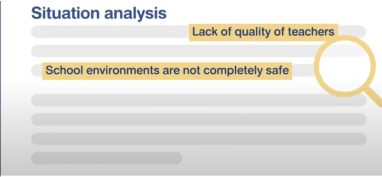
Develop A Comprehensive Indicator Framework
Problems Faced
- Multiple reporting requirements at national/ regional/ global levels.
- Indicators are often missing or misaligned with policy outcomes.
Our Solution
- Choose from a list of pre-loaded global, regional, national indicators.
- Streamline your policy monitoring on EPiC.
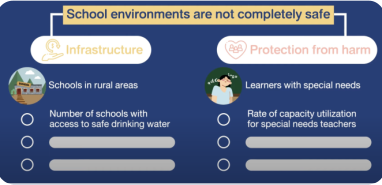
Ensure Policies Are Inclusive for the Most Vulnerable
Problems Faced
- Most disadvantaged group are excluded without assessing multiple deprivations.
- Difficult to prioritize and balance environmental, social & economic aspects.
Our Solution
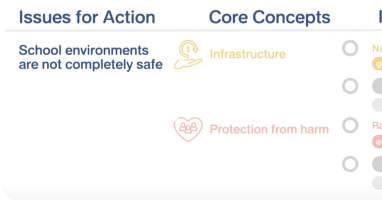
- Identify issues to be addressed and for whom.
- Mainstream different dimensions of sustainable development.
Establishing A Common Language for Data Users and Producers
Problems Faced
- Lack of dialogue and understanding of different stakeholders’ needs.
- No one stop centre to monitor all national policies.
Our Solution
- Facilitate conversations in all stages - from policy development to monitoring & evaluation.
- Hosting all your policies in one place.
EPiC Use Cases: A Closer Look
DEVELOPMENT OF THE PHILIPPINES REGIONAL SDG CATCH-UP PLANS DEVELOPMENT OF AN INCLUSIVE INDICATOR FRAMEWORK FOR THE PHILIPPINES NATIONAL INNOVATION AGENDA AND STRATEGY DOCUMENT (NIASD) DEVELOPMENT OF A DRAFT INDICATOR FRAMEWORK FOR THE TARGETED PROGRAM ON SOCIAL DEVELOPMENT OF MONGOLIA DEVELOPMENT OF A DRAFT INDICATOR FRAMEWORK FOR THE NATIONAL PLAN FOR DISASTER MANAGEMENT (2021-2025) OF BANGLADESH
Discover & Learn More Here
 MANUAL
 RELATED PUBLICATIONS
 WORKSHOP